Where to Stay in Seoul: From Palace Lanes to Late Nights
For a first Seoul trip, start with Myeongdong or Insadong. Choose Hongdae for late nights and direct airport trains, Bukchon for a hanok, and the south bank when your plans revolve around COEX or Lotte World.
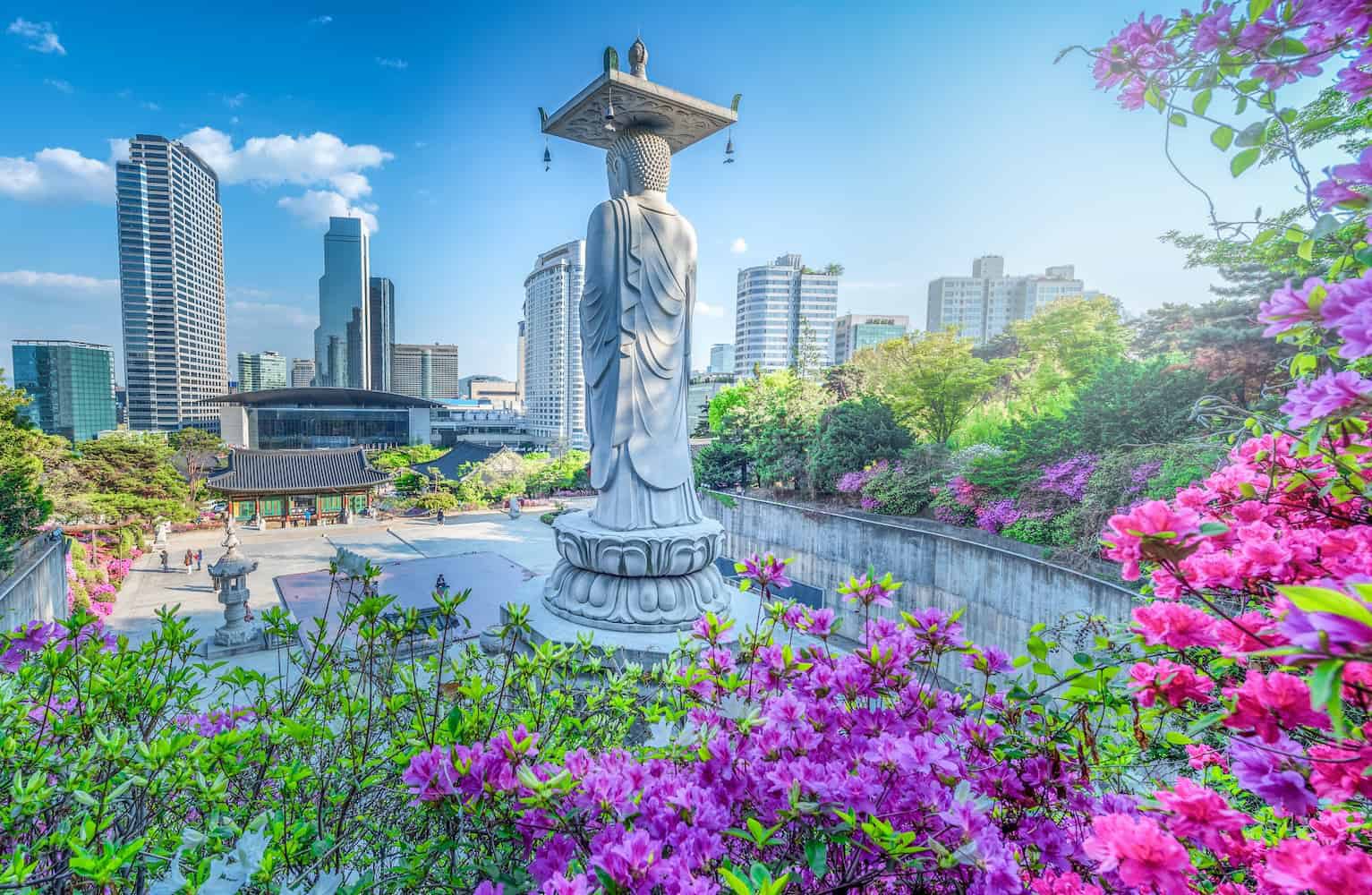

5 Seoul hotels for different trips
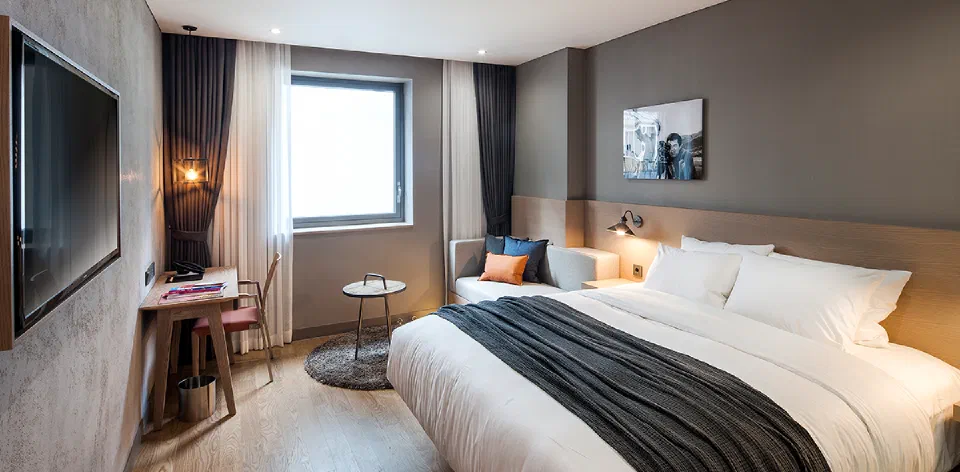 Deluxe Double
Hotel28 Myeongdong
Cinema-inspired rooms near Euljiro 1-ga and the 6015 airport-bus stop.View on Booking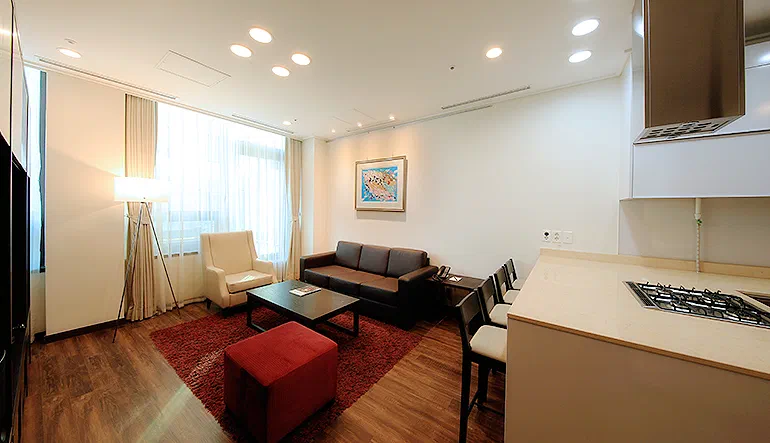 Apartment living room
Orakai Insadong Suites
Insadong apartments with kitchens and separate bedrooms. Nearby works run 07:00–19:00 through August 2029 and may affect some rooms.View on Booking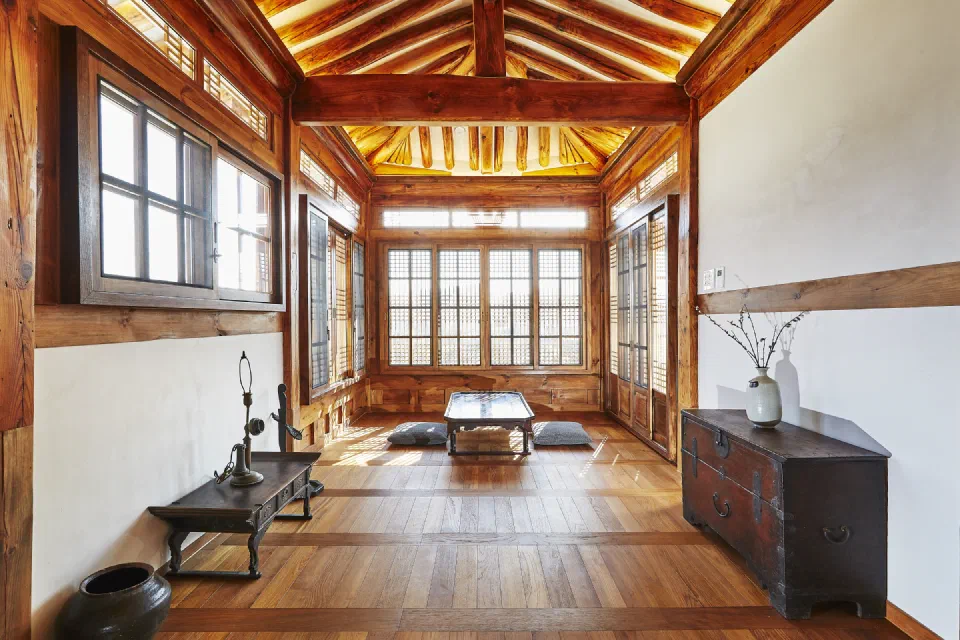 Anbang sitting room
Bukchon Binkwan
A timber hanok above Bukchon’s lanes, with private bathrooms. No children under seven. Check admission at age seven and arrange late arrival before booking.View on Booking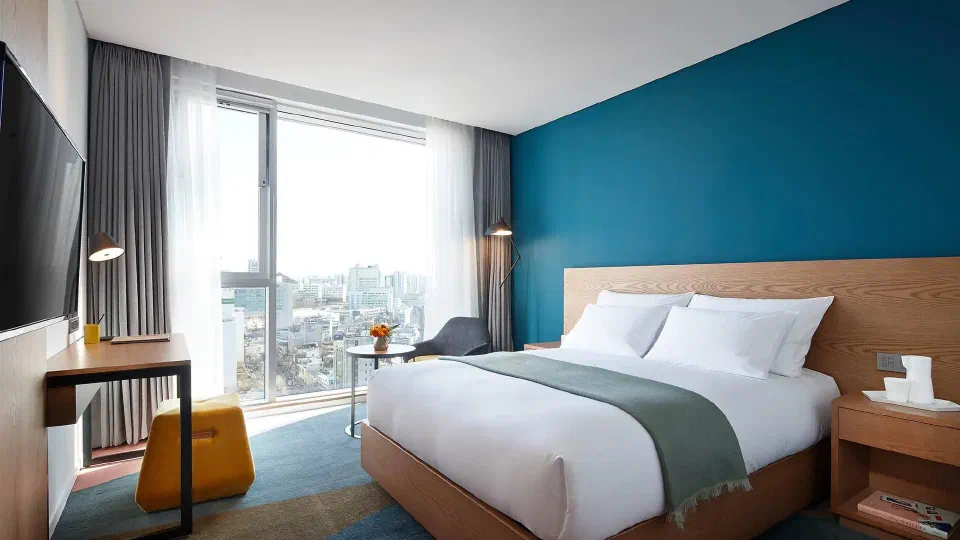 Superior room
L7 Hongdae
On Yanghwa-ro by Hongik University Station, for airport trains and evenings in Hongdae.View on Booking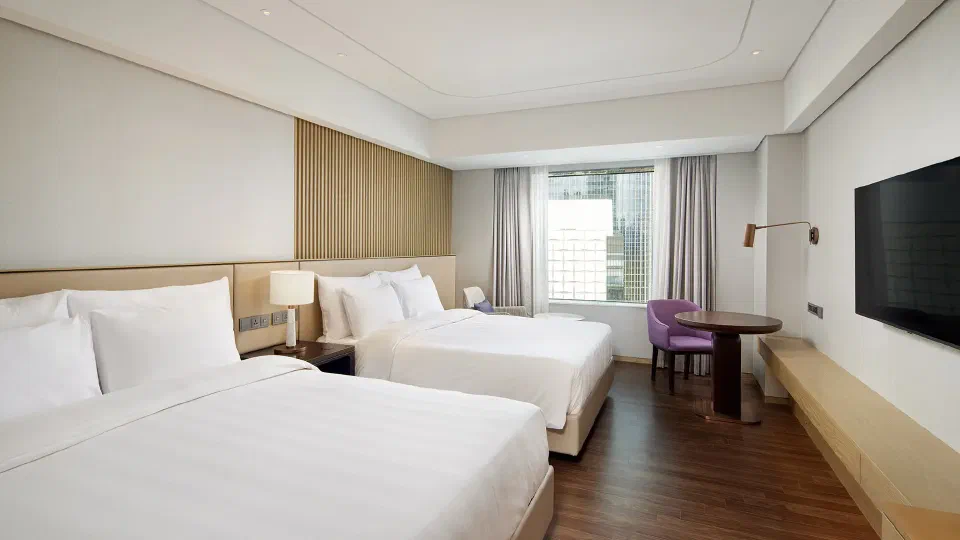 Two double beds
Lotte Hotel World
A four-person room option in Jamsil. Park admission requires a ticket. Some park facilities may be restricted from 1 Nov 2026 to 30 Nov 2027.View on BookingSome hotel links earn us a commission, at no extra cost to you. Affiliate disclosure.
In this guide
Choose a base on the map
Myeongdong, Insadong and Bukchon cluster north of the Han. Hongdae lies to the west, while Gangnam and Jamsil sit across the river to the south and east. Use the map to see the spread, then compare the bases below.
OpenFreeMap is unavailable. You can explicitly load an OpenStreetMap fallback.
Use “Find a numbered base” for numbers that overlap at this scale.
Find a numbered base
Stations, sights and hotels
Match the station to your days
For repeated palace visits, sleeping north of the Han avoids unnecessary crossings. For a COEX exhibition or several days at Lotte World, the south bank makes more sense. The circular Line 2 links several bases on both banks.
Use the hotel’s actual station rather than the district name. A Myeongdong address can be nearer Euljiro 1-ga on Line 2 than Myeongdong on Line 4. Likewise, Apgujeong, Seolleung and Jamsil are not interchangeable simply because they lie south of the river. The station approaches, transfers and final street walk matter as much as the train ride.
From the airport to your hotel
Hongdae has a direct airport-train arrival; Myeongdong offers a choice between rail and an airport bus. Incheon International Airport (ICN) has two terminals, T1 and T2. The AREX all-stop train serves Hongik University for Hongdae; the AREX Express serves only the two airport terminals and Seoul Station.
For Myeongdong, take AREX to Seoul Station and transfer to Line 4, or use bus 6015 to a stop closer to your hotel. Hotel28, for example, uses the Ibis Ambassador Myeongdong stop, not the Myeongdong Station stop. For Insadong or Bukchon, the final leg from a major station can be easier by taxi when you have heavy bags, especially for a hillside hanok.
| Airport service | One-way adult fare | What the journey includes |
|---|---|---|
| AREX Express → Seoul Station | KRW 13,000 from either terminal | 43 minutes from T1; 51 from T2. Separate Express ticket; onward city travel is extra. |
| AREX all-stop → Seoul Station | KRW 4,750 T1 / KRW 5,350 T2 with a transport card | Normally 59 / 66 minutes; some trains take 2–6 minutes longer. |
| AREX all-stop → Hongik University | KRW 4,650 T1 / KRW 5,250 T2 with a transport card | Direct arrival for Hongdae; the walk to the hotel follows. |
| Bus 6015 → Myeongdong/Euljiro | KRW 17,000 | Road journey with several city stops; choose the stop for your address. |
These are train running times and route fares, not airport-to-hotel totals. Allow separately for immigration, baggage, the walk through the terminal, waiting and transfers. With luggage, follow lift signs inside stations: the shortest numbered exit is not necessarily the useful one. Keep the hotel’s Korean address ready for the final taxi or street search.
Gimpo International Airport (GMP) is on the AREX all-stop line too. Adult transport-card fares are KRW 1,650 to Hongik University and KRW 1,750 to Seoul Station. For the south bank, Line 9 express serves Bongeunsa for COEX. Apgujeong needs a Line 3 connection; Jamsil Station can be reached by changing to Line 8 at Seokchon. Seolleung and Seonjeongneung are different stations, so use the one appropriate to your hotel.
If your flight arrives late
The last normal all-stop trains continuing to Seoul Station leave T1 at 23:38 and T2 at 23:32. The later departures at 23:56 / 23:50 end at Digital Media City, before Hongik University. The Express finishes earlier: 22:48 from T1 / 22:40 from T2. All times here are Korean local time.1
After rail service, N6002 serves Hongdae and Gwanghwamun; N6701 serves Seoul Station/Sungnyemun and Euljiro 1-ga by Lotte Hotel Seoul; N6703 serves COEX East Gate and Jamsil’s Lotte Hotel World. The terminal departure lists have gaps, so compare the next bus with a taxi or an airport-area first night. A late arrival is also a reason to choose a hotel that can receive you at that hour rather than a small hanok with an arranged check-in.
Before relying on the last train, check your terminal’s departures and the train’s final stop. Use the Terminal 1 all-stop timetable, Terminal 2 all-stop timetable and AREX service notices for your travel date.
Airport boarding, children’s fares and night-bus departures
Bus 6015 boards at T1, arrivals level 1F, bay 5B-2, and T2, B1, bay 28. At T2, buy a ticket from the counter or kiosk before boarding. The operator’s current last departures are 23:19 from T1 / 22:59 from T2, on weekdays and weekends/holidays. Road traffic can change arrival time; the route may also wait at Namdaemun Market to regulate intervals.
For children aged 6–12, the one-way Express fare is KRW 9,500 and 6015 is KRW 12,000. On the Express, one child under six per accompanying adult travels free without a separate seat; buy a child ticket for a separate seat or for each additional child under six. All-stop single-use adult tickets add KRW 100 to the stated transport-card fare, plus a refundable KRW 500 ticket-card deposit.
Night buses cost KRW 17,000 adult / KRW 10,000 ages 6–12 on N6002, or KRW 18,000 / KRW 12,000 ages 6–12 on N6701 and N6703. For K Airport Limousine services, exchange any QR voucher for the required physical airport ticket.
The airport’s published N6002 departures are T1: 00:00, 00:30, 01:00, 01:40, 04:00, 04:40; T2: 23:40, 00:10, 00:40, 01:20, 03:40, 04:20. For N6701 they are T1: 23:50, 00:40, 01:40, 03:45, 04:40; T2: 23:30, 00:20, 01:20, 03:25, 04:20. Use the linked T1 or T2 timetable for your travel night and the N6703 departures. Midnight times refer to the next calendar day.
Tickets, maps and entry formalities
A T-money card is a straightforward choice for pay-as-you-go travel. Keep some won for top-ups and use Naver Map for local route planning. A foreign bank card used to buy a ticket is not automatically a card you can tap at the transit gate.
Climate Card coverage and what foreign cards can pay for
Short-term Climate Card passes cost KRW 5,000 / KRW 8,000 / KRW 10,000 / KRW 15,000 / KRW 20,000 for 1 / 2 / 3 / 5 / 7 days, plus KRW 3,000 for a physical card. The pass starts on the recharge date, so load it on your first travel day. It suits frequent journeys on covered Seoul subway routes and Seoul-licensed city buses.
Gimpo Airport is covered. At Incheon T1 and T2, eligible all-stop journeys may end, but you cannot board using the Climate Card. AREX Express, airport buses, Shinbundang and GTX are excluded. Short-term passes also exclude Seoul Bike and Hangang Bus. The former prepaid 30-day product stopped accepting recharges after 31 August 2026; visitors should use the current short-term options.
Since 17 March 2026, designated new machines on Lines 1–8 accept international credit/debit cards for short-term Climate Cards and single-journey tickets, with an average service fee of about 3.7%. A T-money card’s purchase price is separate from its travel balance and is not refundable.
Entry depends on your passport and status. The temporary K-ETA exemption for eligible countries and regions runs through 31 December 2026, Korean Standard Time; use the official eligibility service for your passport, particularly for travel in 2027. The free e-Arrival Card is separate: visitors who need it submit within the official three-day window before arrival. Travellers entering on a valid K-ETA and holders of a Korean residence card are among those exempt. Travellers entering on a visa must submit the declaration even if they also hold K-ETA.2
1. Myeongdong and Jung: a convenient first base
Myeongdong makes a mixed itinerary easy: a palace outing, cosmetics shopping and an evening meal can start from the same hotel. Food stalls draw people into the shopping lanes after dark. Ask for a room away from the busiest lanes if you sleep early.
Choose the station side deliberately. Line 4 runs along the southern edge at Myeongdong; Euljiro 1-ga and Euljiro 3-ga serve the northern side on Line 2, with Line 3 at Euljiro 3-ga. Jung-gu is much larger than this walkable shopping cluster.
Deluxe Double
Hotel28 Myeongdong
On Myeongdong 7-gil, near the Line 2 approach from Euljiro 1-ga.View on BookingHotel28’s Family Twin has two queen beds for four guests, with a separate bathtub and shower; the pictured Deluxe Double is a different, two-person category. For arrival on bus 6015, the hotel gives an 80-metre walk from the Ibis Ambassador Myeongdong stop. Euljiro 1-ga is its nearer subway approach.
Lotte City Hotel Myeongdong offers a Deluxe Family Twin for three, with a double and a single bed. For a conventional room near the Line 4 side, ibis Styles Myeongdong is another practical option. Neither is the larger Lotte Hotel Seoul by Euljiro 1-ga.
2. Insadong and Jongno: palace mornings and apartment stays
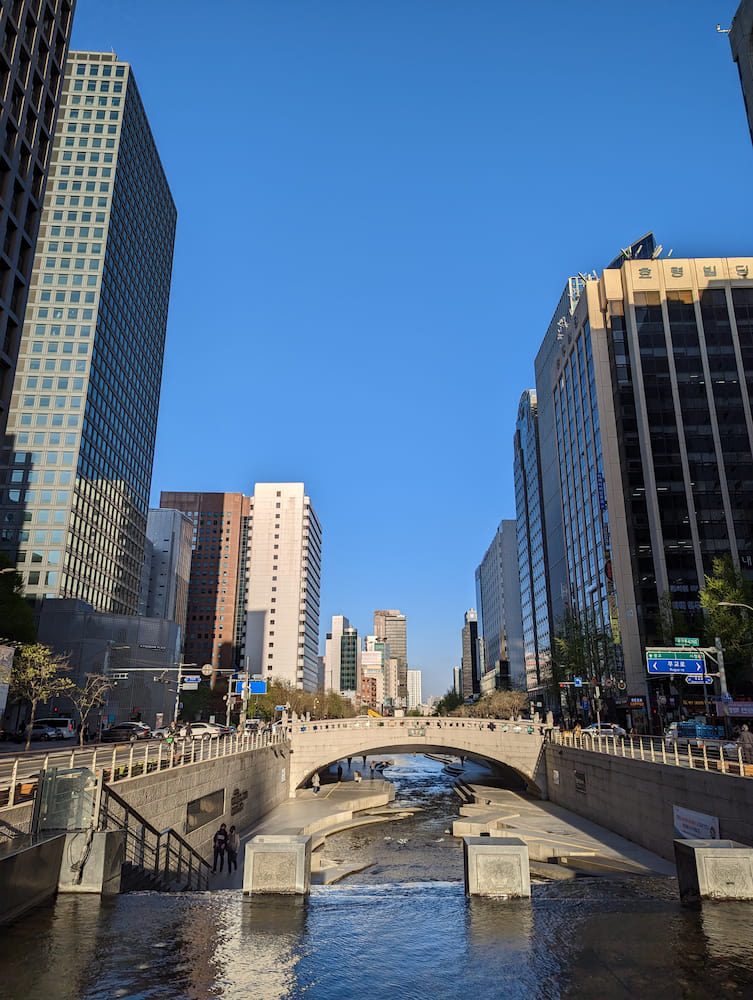
Insadong places crafts, galleries and tea houses between the main palace districts. Choose its northern end near Anguk for Gyeongbokgung and Bukchon, or the Jongno 3-ga end for Lines 1, 3 and 5. The central streets offer a more manageable sightseeing base than the broad label “Jongno” suggests.
Evenings vary by street. The tea-and-craft shops wind down earlier than the restaurants around Jongno 3-ga and Ikseondong.
Apartment living room
Orakai Insadong Suites
A kitchen and laundry for longer stays near Jongno 3-ga. Nearby works run 07:00–19:00 through August 2029 and may affect some rooms.View on BookingAt Orakai, check the apartment’s allowed occupancy. The usual two-bedroom allocation is three guests, while three bedrooms normally accommodate four.
Nine Tree by Parnas Insadong , at 49 Insadong-gil near Anguk, is the simpler choice if you want a conventional hotel room rather than an apartment.
Orakai: extra guests, cleaning and access
The hotel lists KRW 55,000 per night including tax for an additional guest, and separately KRW 55,000 per night for an extra bed. Those are distinct charges; the selected apartment and rate determine what is permitted and payable. Children under 60 months may share existing bedding free, while those aged 60 months and over are charged as adults. The minimum age for independent check-in is 19. Bring a valid ID or passport and a credit card in the guest’s name.
Routine housekeeping excludes Sundays and public holidays, and some ECO STAY rates omit daily cleaning. Heating and cooling switch centrally by season, although apartments have thermostats. There are limited barrier-free apartments for advance arrangement, and same-day luggage storage is free, excluding valuables and refrigerated food.
Plan the palace days before fixing a very short stay: Gyeongbokgung normally closes Tuesday; Changdeokgung normally closes Monday. Public holidays can shift those closures.
Palace admission and the combined ticket
At Gyeongbokgung, ordinary admission for foreign adults aged 19–64 is KRW 3,000. Visitors aged 18 or under, those 65 or over, and visitors wearing qualifying hanbok enter free; bring age identification when relevant. Rental clothing costs extra and is not necessary for admission.
The current KRW 6,000 combined ticket covers one visit each to Gyeongbokgung, Changdeokgung, Changgyeonggung, Deoksugung and Jongmyo within six months. Changdeokgung’s Secret Garden is excluded and needs its own timed admission. A combined ticket or free palace entry does not reserve a garden slot.
3. Bukchon and Ikseondong: choose the actual hanok address
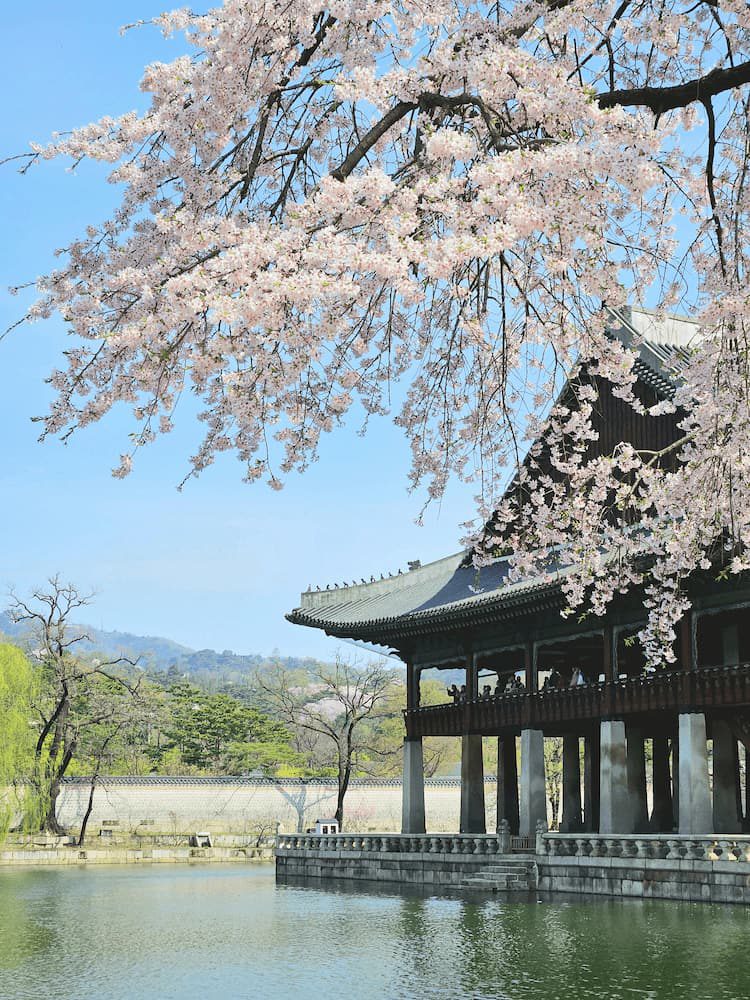
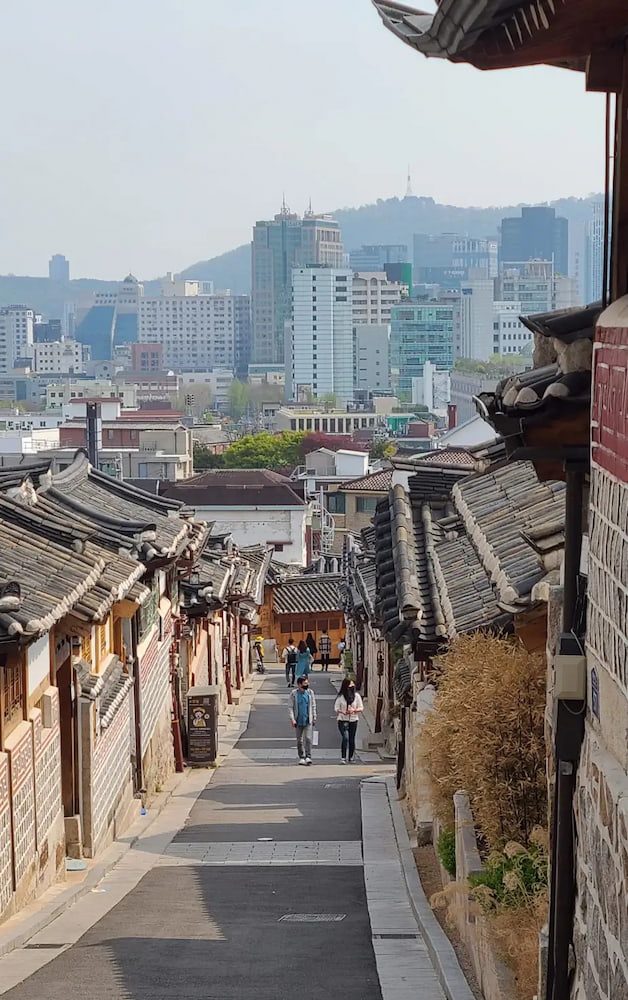
Choose Bukchon for the house itself: timber rooms, courtyards and tiled roofs in a lived-in hillside neighbourhood. It adds a different kind of night to a Seoul trip, particularly if most of your stay is in a modern hotel. The slope and the property’s arrival arrangements are part of that choice.
Ikseondong is a different cluster, near Jongno 3-ga, where narrow hanok lanes hold cafés and restaurants. It is easy to visit from an Insadong hotel. A listing described broadly as “hanok” does not establish its neighbourhood, bed type or access arrangements.
Anbang sitting room
Bukchon Binkwan
A hillside hanok with several bed and bathroom layouts. No children under seven. Check admission at age seven and arrange late arrival before booking.View on BookingAt Bukchon Binkwan, Anbang has raised single beds and a private hinoki bath; other categories can have different bedding. A hanok stay does not automatically mean sleeping on a floor mat. For a family, the Sarangbang suite accommodates up to four, subject to the child-admission policy. Choose the offered bed layout for your party rather than assuming every suite is alike.
The approach from Anguk climbs. A taxi can reduce the haul, but the narrow lane may leave a final section on foot. Standard check-in is 15:00–20:00; agree any later arrival with the property before booking.
Bukchon’s visiting rule is about the designated Red Zone, not the whole neighbourhood. Around Bukchon-ro 11-gil, tourist visits are restricted between 17:00 and 10:00, with a KRW 100,000 fine in force since 1 March 2025. Accommodation guests can show their booking confirmation to reach their lodging, but sightseeing, photography and lingering during restricted hours can still attract a fine. Stay quietly and follow the directions for your actual address; save your booking confirmation before you arrive.3
For a hanok stay with younger children, SeoulStory Hanok is a private house near Anguk with a kitchen and two bathrooms. Booking lists children of all ages as welcome, with no cots or extra beds. Enter your party size and children’s ages to check occupancy.
4. Hongdae and Sinchon: music, cafés and a walk home
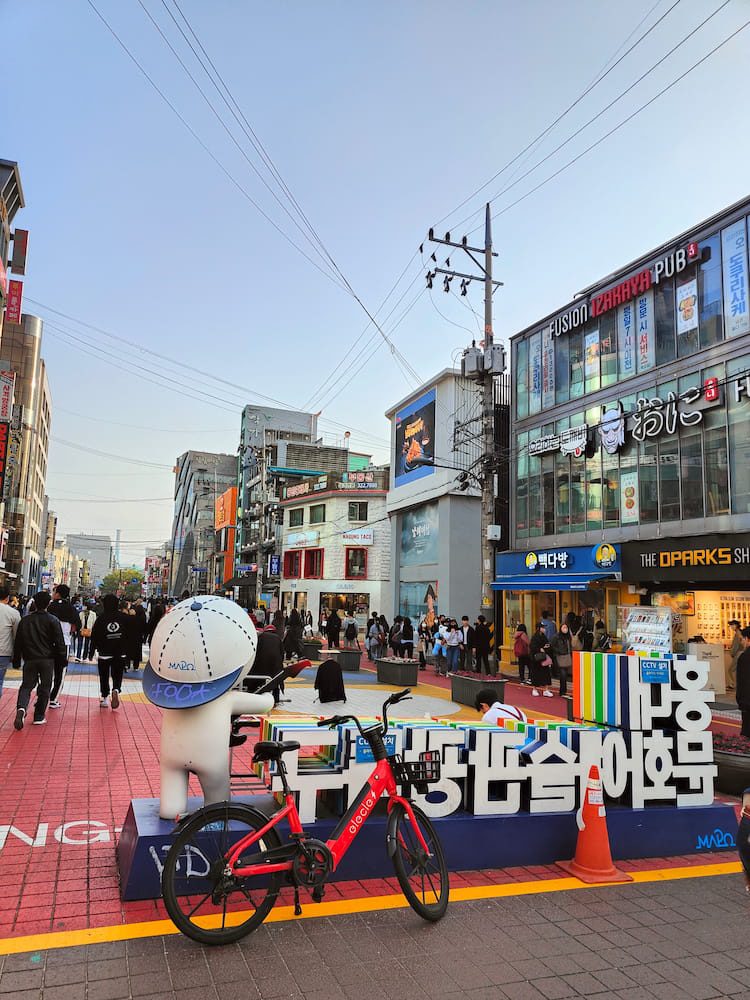
Hongdae suits evenings that outlast the trains: live music, clubs, karaoke and a late meal are reasons to sleep nearby. Around Hongik University, the shopping streets lead into several different pockets, so the broad Hongdae label alone tells you little about the noise outside a particular room.
The airport advantage belongs to Hongik University Station, where the AREX all-stop meets Line 2. Sinchon lies to the east and has its own station and student dining streets. A Sinchon address can be useful, but it is not the same direct airport arrival or final walk as a hotel beside Hongik University.
Superior room
L7 Hongdae
On Yanghwa-ro near Hongik University Station, handy for the airport train.View on BookingL7’s Superior Double or Twin is a two-person category on higher floors. A higher floor is a room choice, not a quietness guarantee. There is a separately named Standard Accessible Room with a roll-in shower. The rooftop pool has seasonal, ticket and session rules, so treat it as a date-specific extra rather than the reason for a winter booking.
RYSE, Autograph Collection adds art-led rooms and the Side Note Club cocktail bar on Yanghwa-ro if the hotel’s design and evening spaces are part of the appeal.
5. Itaewon and Yongsan: dining streets or a hillside hotel
Itaewon works well for a trip with international restaurants and evenings out at its centre. The main Line 6 corridor, the slopes towards Haebangchon and Namsan, and the hotels on Jangmun-ro have different walks home. Take the gradient seriously when choosing where to sleep with a pushchair or heavy luggage.
The Yongsan railway-station area is farther west. It can suit an onward rail journey or museum plans, but a hotel marketed as “Yongsan” is not necessarily beside Itaewon’s restaurants. Choose the station area specifically if rail access is the priority.
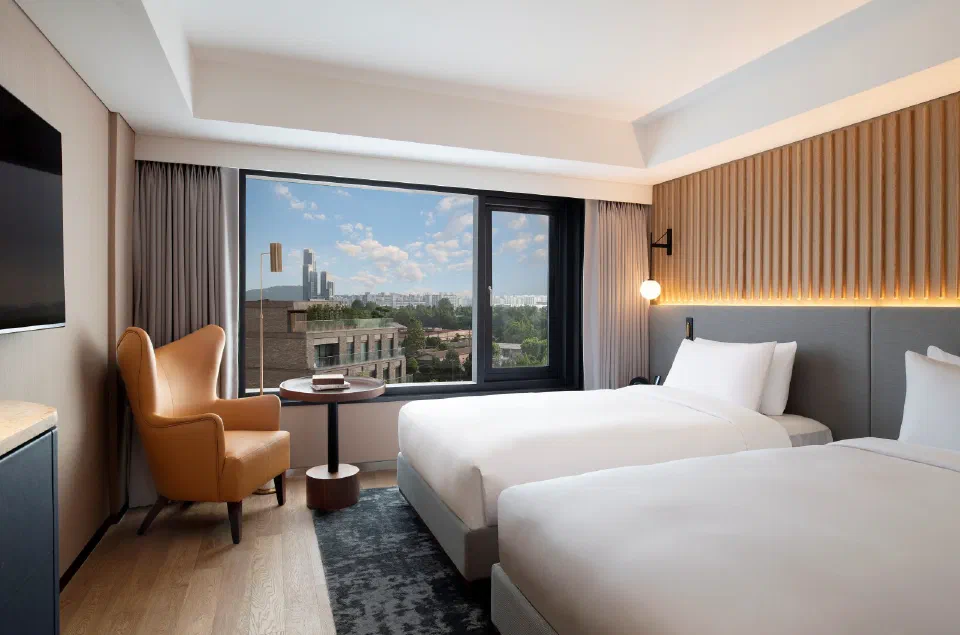 Signature Twin
Mondrian Seoul Itaewon
On Jangmun-ro, uphill from the main Line 6 dining streets.View on BookingMondrian’s Signature Twin is 22 m² with a rain shower; the separate accessible category is a Signature King. Allow for the walk to Line 6 or a taxi.
Mondrian’s indoor and outdoor pools
Indoor-pool and gym access is limited to once per night on Fridays, Saturdays and public holidays; the indoor main pool requires a swim cap. The fitness club normally closes on the first Tuesday of each month. Altitude’s separately ticketed outdoor pool ended its published 2026 season on 27 September; use the hotel’s next season announcement for any later outdoor-pool plan.
Imperial Palace Boutique , at 221 Itaewon-ro, puts you on the main dining-street side near Itaewon Station. Grand Hyatt Seoul offers a Namsan hillside stay and broad city views, with a daytime guest shuttle to Hangangjin and Myeongdong; use its published timetable for the return.
6. Gangnam and Apgujeong: boutiques, business or COEX
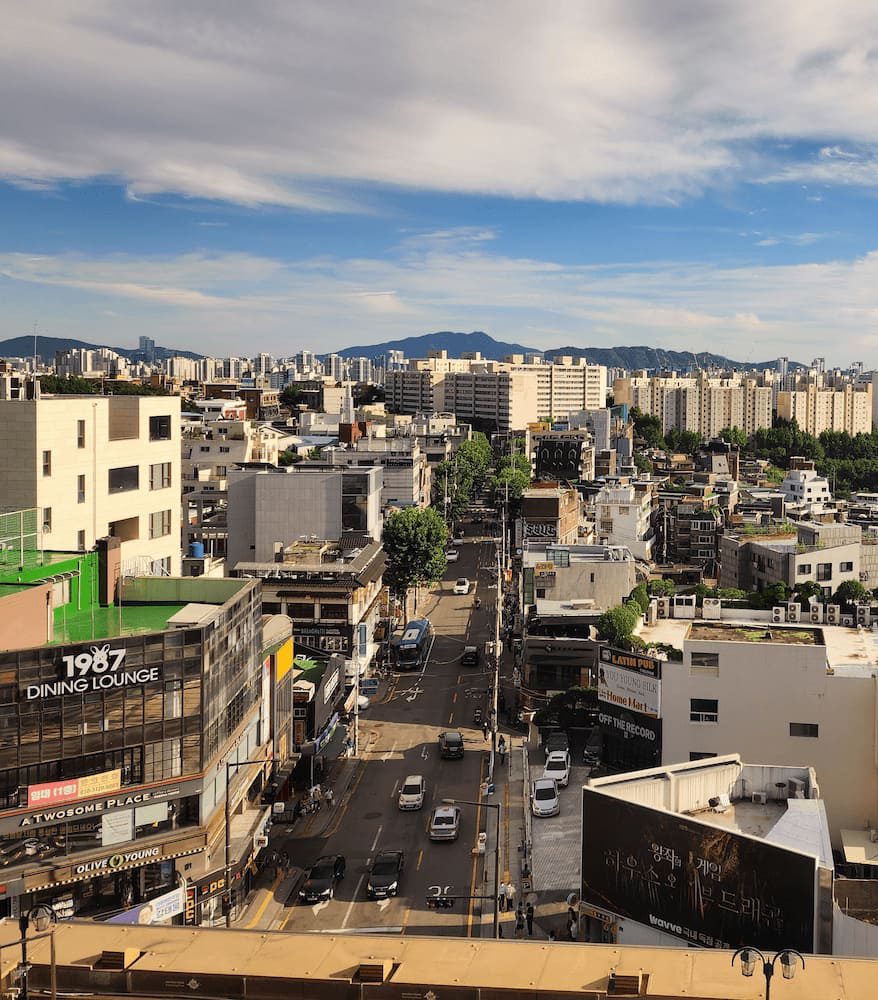
Gangnam needs a more precise choice than “south of the river.” Apgujeong is a shopping and dining base on Line 3. Seolleung serves the Teheran-ro office corridor on Line 2 and the Suin–Bundang line. COEX has its own useful approaches from Samseong and Bongeunsa. Picking the right one can matter more than picking the most elaborate hotel.
Stay on this side for appointments, an exhibition or several days of south-bank plans. Palace visits remain possible, but they become journeys across the city rather than walks from the door. Nor does a Gangnam address mean the hotel overlooks the Han.
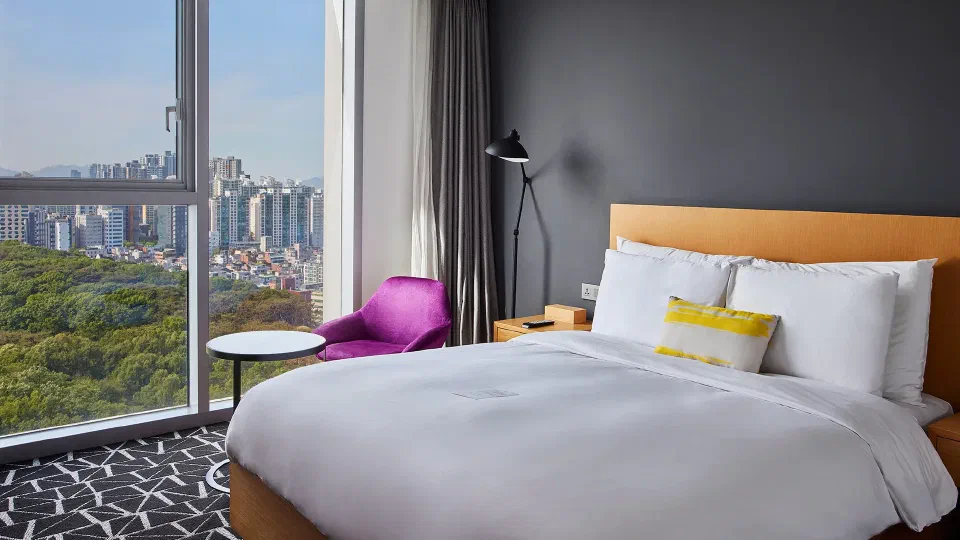 Garden-view room
L7 Gangnam
A Seolleung base for Teheran-ro and COEX, with a named garden-view category.View on BookingL7 Gangnam’s pictured Garden View Double is a named two-person category facing Seonjeongneung; its bathroom has a shower booth, not a bathtub. Extra beds are available only in suites, at an additional charge.
Andaz Seoul Gangnam, By Hyatt is connected to Apgujeong Station. The standard 1 King Bed has a rain shower, with neither a soaking bathtub nor an extra-bed option. The Accessible Deluxe is a separate category. The concierge offers complimentary luggage storage before check-in and after checkout.
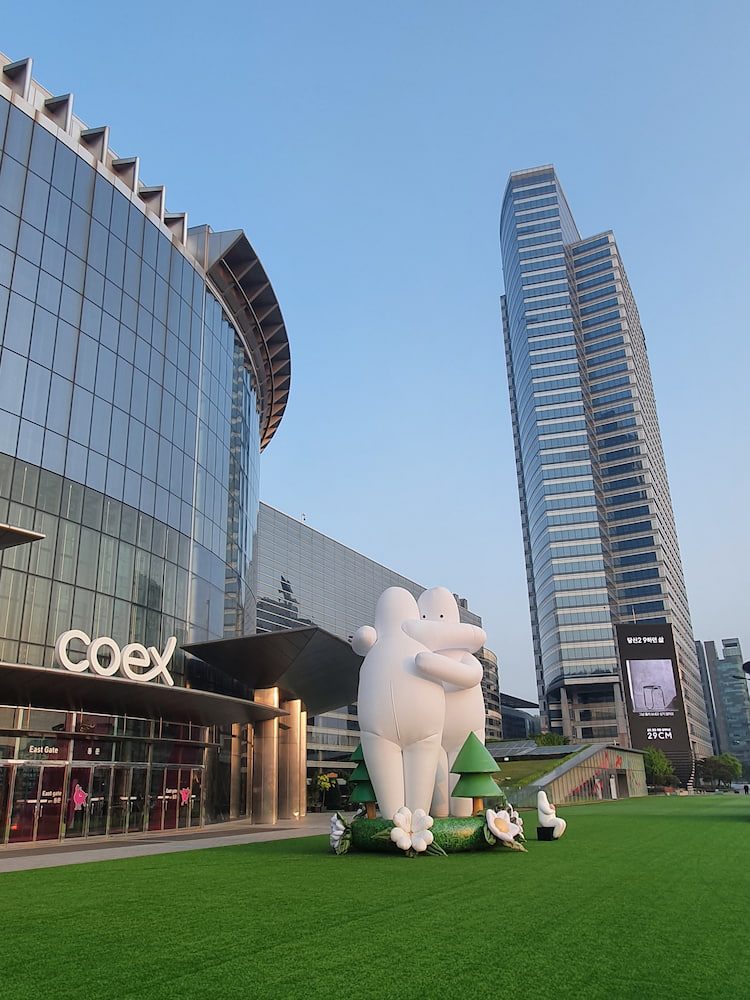
7. Jamsil and Songpa: Lotte World and family rooms
Jamsil is useful when Lotte World, the aquarium, the tower and Seokchon Lake are central to the trip. The cluster gives families several ways to spend a day without crossing Seoul, with Line 2 and Line 8 for outings elsewhere. Indoor shopping and attractions also help on a wet day, although not every part of Lotte World is indoors.
For a concert, use the actual venue: the Lotte complex, Sports Complex and Olympic Park are separate places. Songpa is a district, not a promise that every event is beside your hotel.
Two double beds
Lotte Hotel World
At Jamsil Station, beside Lotte World Adventure. Park admission requires a ticket. Some park facilities may be restricted from 1 Nov 2026 to 30 Nov 2027.View on BookingAt Lotte Hotel World, Residential Deluxe Double Double rooms accommodate four guests in two double beds, with a microwave and washer-dryer. Other Family Twin categories may allow only three. These details belong to the named room category, so select it when four-person capacity matters.
The hotel’s Wonder Door connects to Lotte World Adventure. Buy the hotel-exclusive park ticket at the front desk and enter through Wonder Door to receive a wristband for one same-day re-entry. A room-only booking does not include park admission. Some park facilities may be restricted during the announced renovation period; the notice does not mean the whole park is closed.
Signiel Seoul is the alternative if sleeping high inside Lotte World Tower is the point of the stay. The hotel occupies floors 76–101; City View, River View and Scenic Bath are different room options, so choose the view you actually want.
For an Olympic Park-focused stay, Seoul Olympic Parktel shifts the base to 448 Olympic-ro, with approaches from Mongchontoseong or Hanseong Baekje stations. Choose it for that park and venue area, allowing separately for the journey to Jamsil’s Lotte complex.
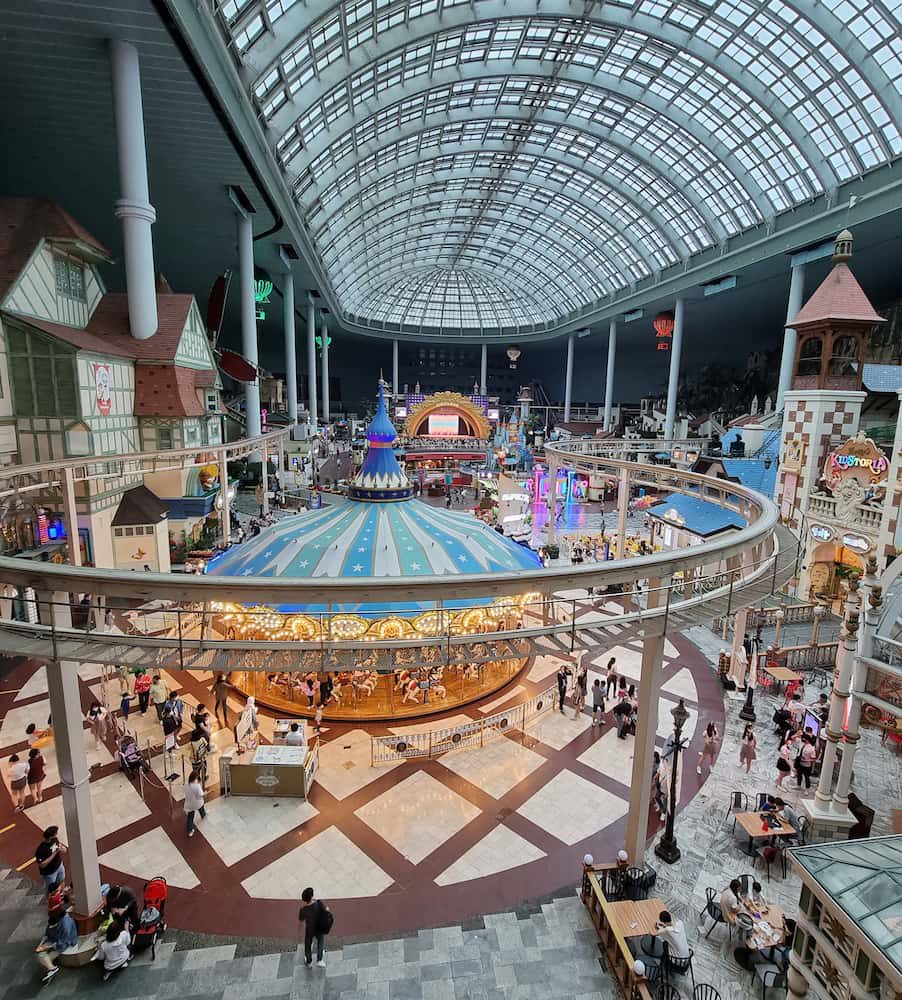
How the season changes the choice
In spring and autumn, Insadong and Bukchon reward a trip built around walking between palaces and neighbourhood streets. Seokchon Lake gives Jamsil a spring-flower reason to stay, while its tower-and-mall setting remains very different from the historic north. Blossom and foliage timing varies with the weather.
Summer brings heat, humidity and the early-summer rainy season. A short station-to-hotel walk becomes more useful than an ambitious list of sights within reach. Jamsil’s indoor attractions, the city’s museums and hotels with usable indoor pools provide alternatives to a long outdoor day.
Winter can make Bukchon’s sloping approaches less appealing with luggage. For a hanok, choose the room’s heating and arrival arrangements as carefully as its atmosphere; for a conventional hotel, the station connection may matter more. During Seollal or Chuseok, look at opening notices for the particular restaurant or attraction you intend to use.
Final questions before booking
Myeongdong or Insadong for a first visit?
Choose Myeongdong when shopping and a varied city itinerary dominate. Choose Insadong when you want several palace visits and a smaller historic-area walking circuit. The hotel’s nearest station and room type are the useful tie-breakers; you do not need to move hotels to see both.
Should I split a short stay between north and south?
Usually, one well-chosen base is easier. A split becomes useful when the second part has a different purpose, such as several Lotte World days or a COEX event. Moving just for one cross-city outing adds packing and check-in to a trip the railway already connects.
Which base works for a family of four?
Hotel28’s Family Twin keeps a family in the central shopping area; Lotte Hotel World’s Residential Deluxe Double Double suits a Jamsil-focused trip. Orakai offers apartments, but its usual two-bedroom occupancy is three, so select the permitted four-person configuration. A room called “family” is not automatically for four.
Is a hanok suitable if I need a bed and easy access?
Some named rooms, including Binkwan’s Anbang, have raised beds. Access is a separate question: slopes, thresholds and the route into the exact room matter. Give the property your mobility requirements before choosing the category. Travellers with young children also need an eligible property; Binkwan excludes children under seven, and admission for a seven-year-old needs confirmation with the property.
Where should I stay if I expect late nights?
Choose Hongdae when most evenings will be there; choose the Itaewon station area for its dining and bar streets. Being able to walk home can outweigh daytime convenience elsewhere. Use the actual address to judge that walk, especially on Itaewon’s hills.
What should I compare in the final hotel offer?
Compare the room name, permitted guests and bedding, cancellation terms, breakfast, and the total including stated taxes and charges. For a special view, pool, kitchen or park ticket, use the inclusion attached to that exact room or package. The photographs here identify their room or shared-space category; they do not make every room equivalent.
Make the last choice by address
Once you have a base, save the hotel’s Korean address and its nearest useful station or airport-bus stop. That final stretch is the difference between a convenient Seoul booking and one that only looks close on a citywide map.
Sources & updates
Researched remotely on 10 November 2026 using official operators, public authorities and property information. Hotel conditions apply to the named room or package. Booking.com guest scores and review counts were checked on 22 November 2026 and describe each property overall.
Airport trains and buses
- AREX lists separate Express fares and running times and all-stop fares, with all-stop departures for Terminal 1 and Terminal 2. Check the separate last Express departures. ↩︎
- Use the 6015 operator timetable for Myeongdong boarding and fares. Incheon Airport lists night buses by terminal (T1, T2). For Gimpo arrivals, see the Line 9 express-stop map.
City transport and payment
- The Climate Card guide lists valid routes and short-term prices. Separate guidance covers international-card payment at designated ticket machines and T-money top-ups.
Bukchon and the palaces
- Seoul’s Red Zone notice gives the boundary, visiting hours and fine. Jongno’s guest-access guidance (in Korean) explains when an accommodation guest can enter with a booking confirmation. ↩︎
- The Korea Heritage Service lists Gyeongbokgung opening days and admission and Changdeokgung and Secret Garden tickets. The combined palace ticket excludes the Secret Garden.
Room layouts, access and park visits
- Compare the Hotel28 Family Twin room with Orakai occupancy, check-in and housekeeping rules and its extra-person charges. Orakai’s booking listing also carries the nearby construction notice.
- Check Binkwan’s house rules if travelling with a seven-year-old, as age wording differs across listing languages. The municipal accommodation listing lists room features. The SeoulStory Hanok profile gives its layout and address. Booking’s house rules explain child admission.
- See L7 Hongdae’s accessible room and the Andaz room categories. Mondrian publishes separate rules for its indoor pool and outdoor pool season.
- Lotte Hotel World gives capacity for the Residential Deluxe Double Double, ticket requirements for Wonder Door and dates for the partial Lotte World Adventure renovation (1 November 2026–30 November 2027).
Entry requirements
- The temporary K-ETA exemption applies to eligible passports through 31 December 2026 (Korean Standard Time). The e-Arrival Card has separate guidance on who needs to declare and when to submit. ↩︎
Hotel photo sources
- Hotel28 Myeongdong: Deluxe Double room · source
- Orakai Insadong Suites: One Bedroom Apartment living room · source
- Bukchon Binkwan: Anbang suite · source
- L7 Hongdae: Superior room · source
- Mondrian Seoul Itaewon: Signature Twin room · source
- L7 Gangnam: Garden View Double room · source
- Lotte Hotel World: Residential Deluxe Double Double room · source