Where to Stay in Kyoto: Find the Right Base for Your Trip
For a first visit, stay around Sanjo or Kawaramachi for dinners and river walks. Choose Gion for historic streets, Kyoto Station for early trains, or add an Arashiyama ryokan night when the inn is part of the experience.

Five Kyoto stays for different kinds of trip
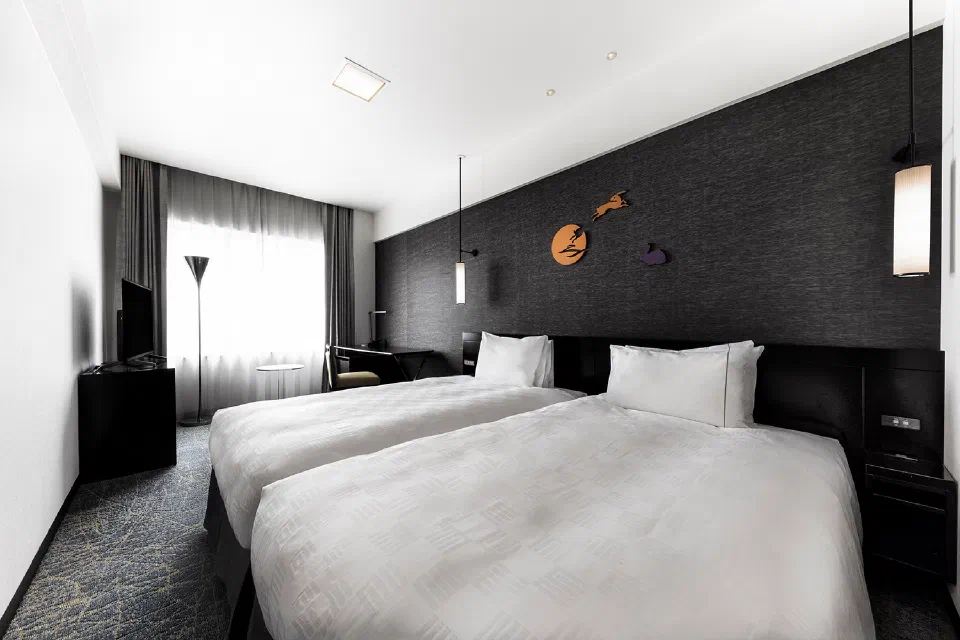 Standard Twin
Royal Park Kyoto Sanjo
In Downtown near Sanjo trains and restaurants, with Gion across the river.View on Booking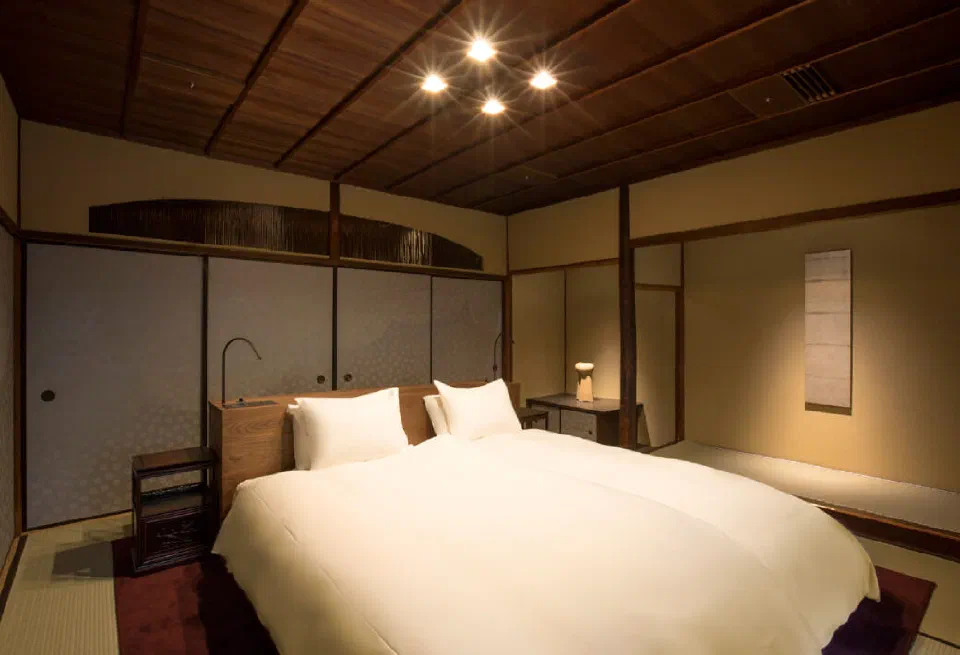 Main Building
SOWAKA
Restored townhouse near Yasaka Shrine. Booking lists 12+. For younger children, ask SOWAKA directly about an eligible Annex room.View on Booking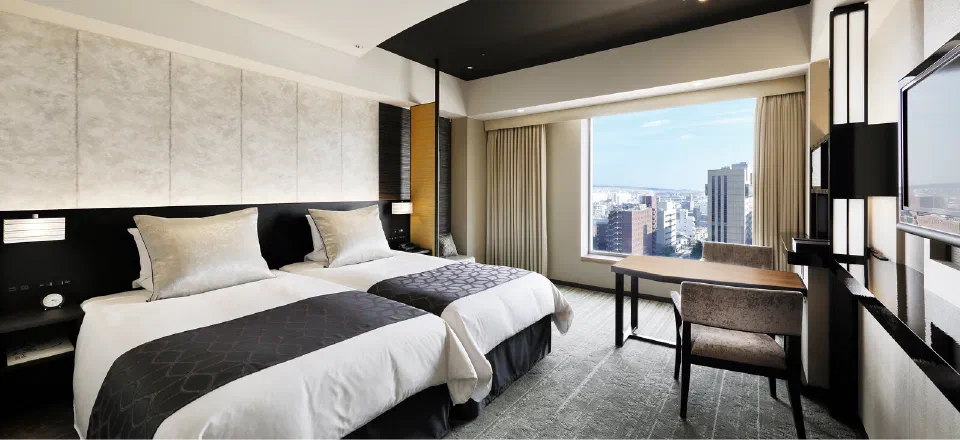 Superior Twin
Hotel Granvia Kyoto
Inside Kyoto Station for early departures. Pool and fitness facilities are 18+.View on Booking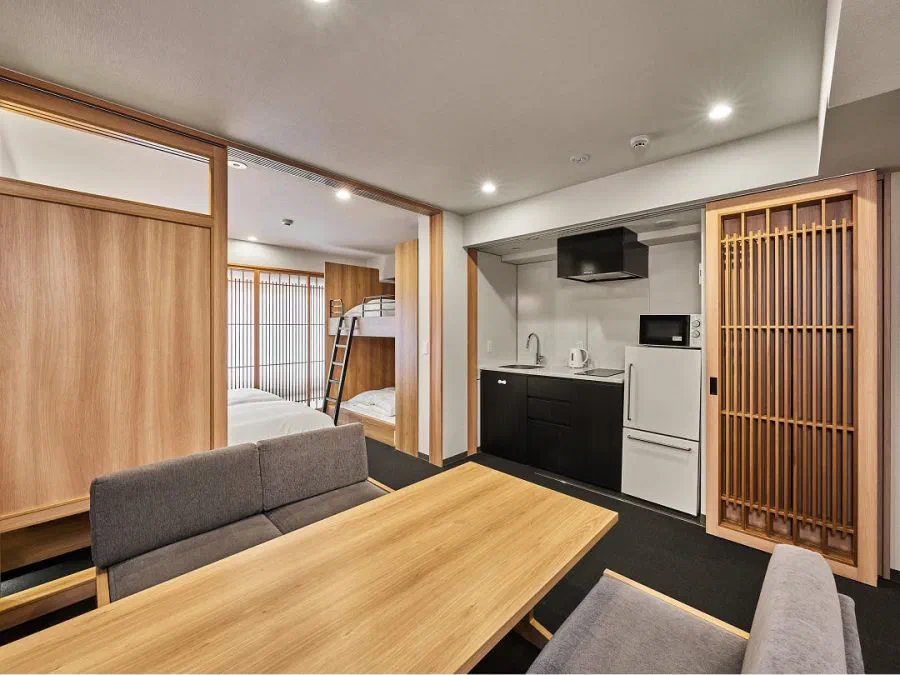 Kitchen and dining
MIMARU Shinmachi Sanjo
A kitchen and dining space near Karasuma Oike. Choose a One-Bedroom Family Apartment for bunk beds.View on Booking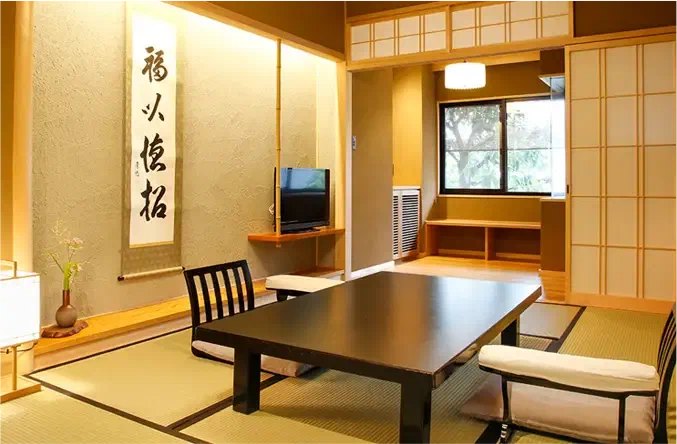 Tatami room
Togetsutei
Riverside ryokan with dinner plans. Booking check-in ends at 19:00. Guests with tattoos need to reserve a paid private bath.View on BookingSome hotel links earn us a commission, at no extra cost to you. Affiliate disclosure.
In this guide
Choose your part of Kyoto
Kyoto Station sits south of the central evening bases, and Gion is across the Kamo River from Downtown. Switch map views for Arashiyama in the west or Fushimi Inari farther south.
OpenFreeMap is unavailable. You can explicitly load an OpenStreetMap fallback.
Use “Find any of the six bases” if a number is hidden at this zoom.
Find any of the six bases
Sights, stations & hotels
Gion or Kyoto Station?
Base the choice on the journeys you will repeat. An early Shinkansen or several JR day trips favour the station. Repeated walks through eastern Kyoto favour Gion. One visit to Fushimi Inari or Arashiyama does not, by itself, require moving hotels: both are reached by rail from central bases.
1. Gion and Higashiyama: historic streets after sightseeing
Stay near Yasaka Shrine for Gion evenings and walks towards Kodai-ji, Ninenzaka and Sannenzaka. The southern Higashiyama slopes continue towards Kiyomizu-dera; these are different starting points, so a hotel described as “in Gion” is not automatically beside every temple.
Main Building
SOWAKA
Main Building and Booking listing are 12+. For younger children, ask SOWAKA directly about an eligible Annex room.View on BookingSOWAKA’s historic Main Building and modern Annex offer different stays. Main Building room 103 pairs a king bed with a garden view. Guests needing wheelchair access are accommodated in the Annex. Some other rooms have split levels. For children under 12, check SOWAKA’s age and room guide and ask the hotel to confirm a suitable Annex room.
Celestine: guest bath and shuttle, with construction nearby
Adjacent construction is scheduled from 1 October 2026 to 31 March 2028, normally 08:00–18:00, with about 30 minutes of preparation and clean-up either side. Noise and vibration are possible. There is also a full hotel closure from 12 January 2027 at noon to 13 January at 15:00. With those limitations, Hotel The Celestine Kyoto Gion remains an alternative for its guest public bath and free Kyoto Station shuttle. The bath permits tattoos.
Gion has restaurants and bars, particularly towards Shijo and the river. Farther uphill, the evening becomes more about the streets and the hotel. With luggage or a pushchair, the final approach matters more than a district-wide walking-time estimate.
Follow the public lanes around Hanamikoji and Shirakawa for an evening walk and respect signs at private lanes. Do not follow, obstruct or photograph working geiko and maiko without permission.
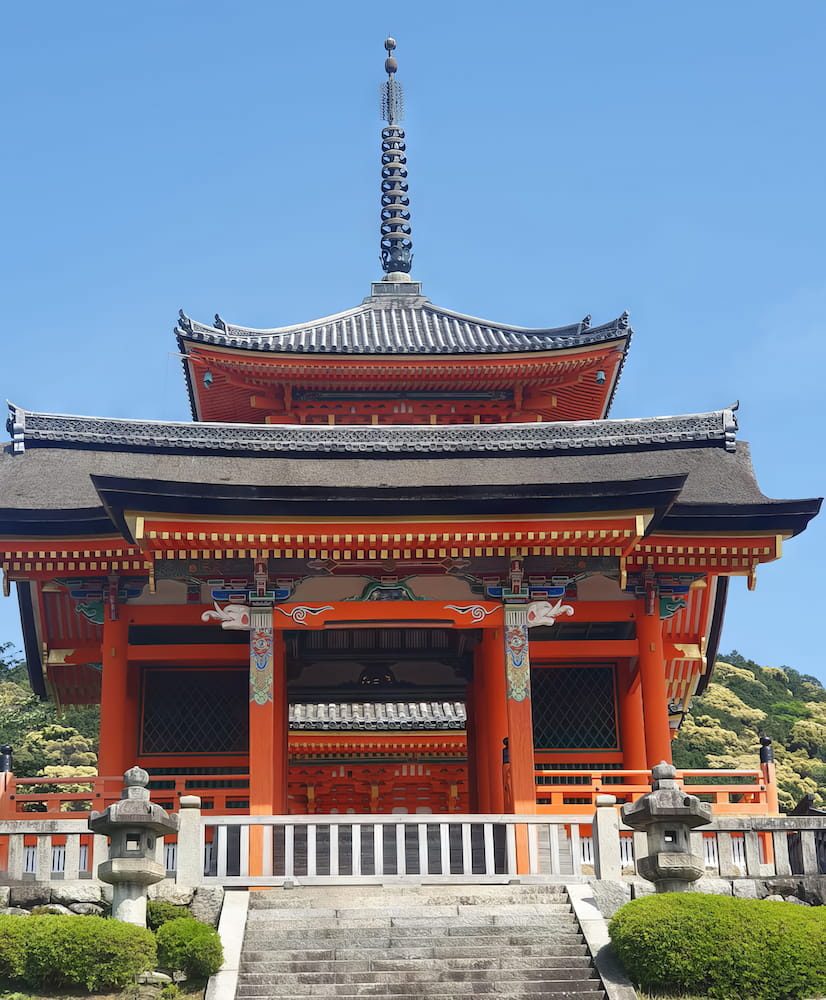
This Booking district also includes addresses west of the river; use the hotel’s actual location for an eastern-side stay.
2. Downtown: dinners, shops and the river
Downtown suits a first trip when you want to choose dinner after sightseeing and walk home. Sanjo puts the north end of the restaurant district and Keihan trains close by; Shijo-Kawaramachi favours shopping, the south end of Pontochō and Hankyu services. Nishiki Market sits farther west.
Standard Twin
Royal Park Kyoto Sanjo
Near Sanjo for Keihan trains and Kyoto Shiyakusho-mae for the Tozai subway.View on BookingAt Royal Park, the Standard Twin is 24 m², with two 110 cm beds; its Standard Double has a 163 cm bed. Sanjo on Keihan and Kyoto Shiyakusho-mae on the Tozai subway are each an operator-estimated three-minute walk away.
Pontochō runs beside the Kamo River. Kiyamachi follows the smaller Takase canal. Restaurant and bar streets can remain lively late, so a bedroom facing a quieter street or inward can be useful for a light sleeper.
For Arashiyama, Hankyu requires a change at Katsura. For eastern Kyoto and Fushimi Inari, Keihan is useful. The Karasuma subway lies farther west, so match the railway to the hotel’s street.
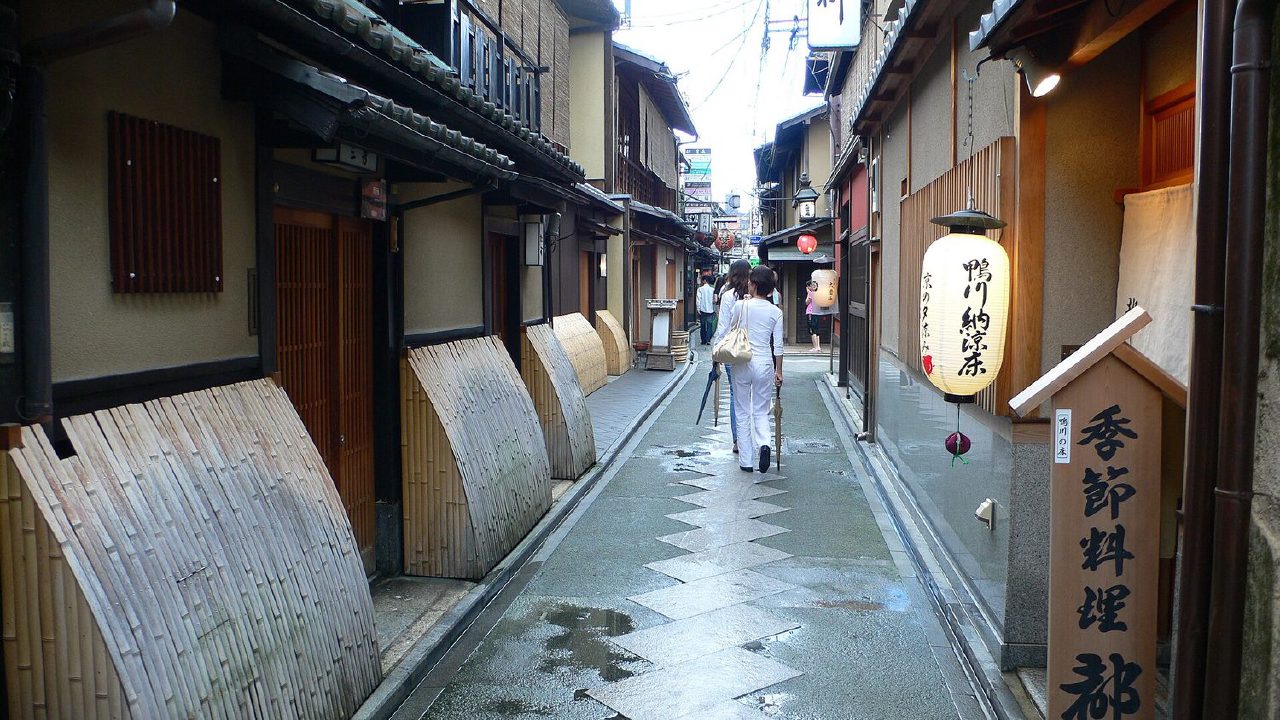
This search centres on the market end of Downtown, rather than all of Sanjo and the riverfront.
3. Kyoto Station: an easier start and departure
Choose the station when you will use the Shinkansen, arrive on HARUKA or make several JR trips. The area also has its own sights, including Higashi Hongan-ji, and places to eat around the station. For a Gion or Pontochō evening, allow for the journey back.
Superior Twin
Hotel Granvia Kyoto
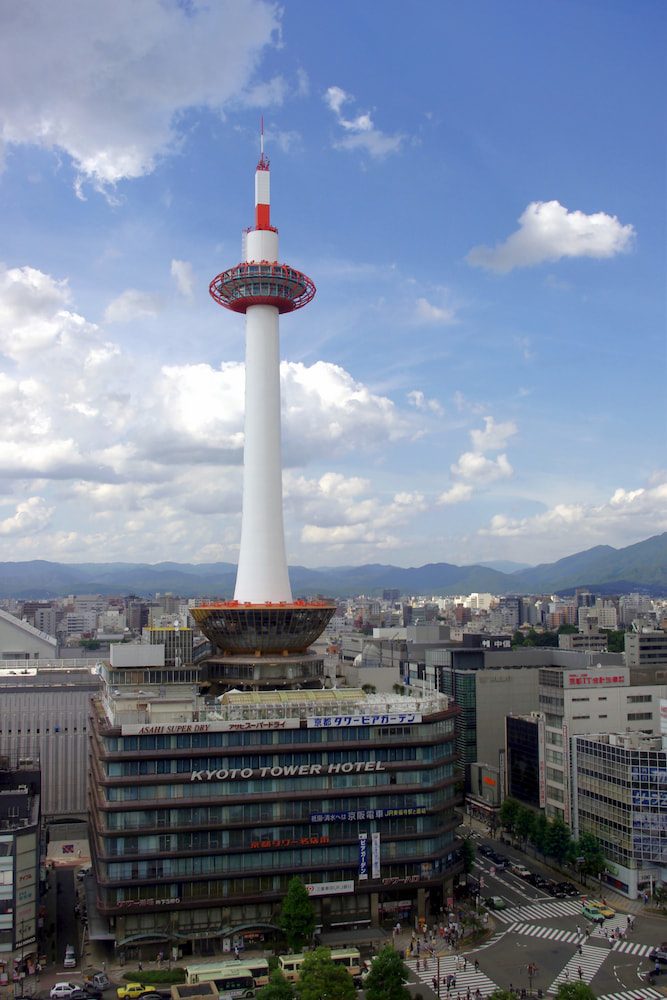
Enter from the Central Exit concourse. Pool and fitness facilities are 18+.View on BookingAfter arriving on HARUKA, Granvia’s directions use the Central/Chuo exit and the escalator on the right to the second-floor lobby. Airport coaches arrive on the south, Hachijo side, so staying “at the station” still involves crossing the building. Family and triple layouts are separate room categories.
THE THOUSAND KYOTO is an alternative in a separate hotel building just east of the Central Gate, an operator-estimated two-minute walk away.
JR serves Arashiyama through Saga-Arashiyama and Fushimi Inari through Inari Station. For Nara, compare the arrival station with your plans: JR Nara and Kintetsu-Nara are different stations. Rail convenience is the reason to choose this base, rather than an expectation that Kyoto’s eastern temple lanes are outside the door.
4. Arashiyama: make room for a ryokan night
Arashiyama works well for a night centred on the inn and the river. Stay here to reach the bamboo grove and Tenryū-ji early, before the day trips arrive. Many cafés and restaurants close earlier than those Downtown, making an included dinner especially useful. It is a western base; daily journeys to eastern Kyoto are a different proposition from stepping out towards the bamboo grove.
Tatami room
Togetsutei
Communal hot springs. Booking check-in ends at 19:00. Guests with tattoos need to reserve a paid private bath.View on BookingTogetsutei has Shuzankaku and Hekisenkaku accommodation. The communal hot springs are in Shuzankaku, with an underground connection between the buildings. Hekisenkaku has stairs and no lift. Most room baths use ordinary water. Arashiyama-no-Ma is the named natural-hot-spring room. The pictured Kiyotaki-no-ma is a standard tatami category.
Booking lists check-in from 16:00 to 19:00. One direct dinner plan lists check-in until 19:30 and asks guests to call if arriving after 18:00. Follow the arrival window for the rate you book. Guests with tattoos can reserve a paid private bath instead of using the communal baths.1
Ranzan offers Western twin rooms as well as tatami rooms, plus a garden and shared bath. A twin suits travellers who prefer beds to futons.
Togetsutei is south of Togetsukyo Bridge. Hankyu Arashiyama is on that side; JR Saga-Arashiyama and Randen Arashiyama are north of the river. From Downtown by Hankyu, change at Katsura. Choose the arrival station against your inn, rather than treating the three “Arashiyama” stations as interchangeable.
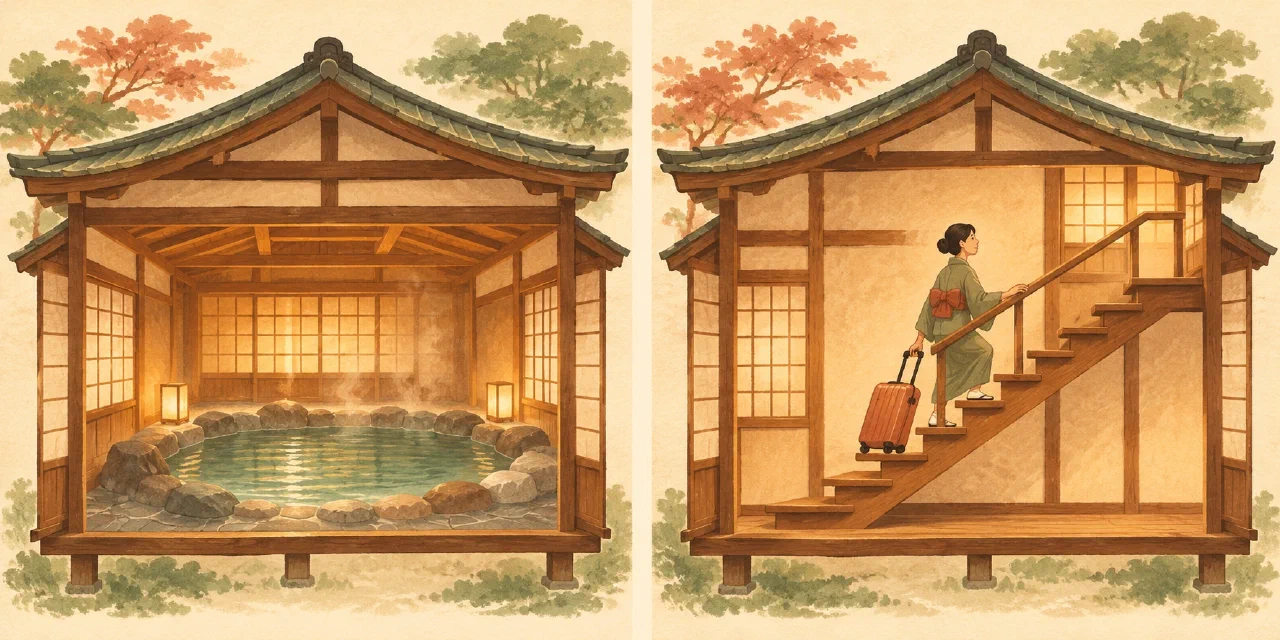
The drawings are conceptual. Most room baths use ordinary water. Arashiyama-no-Ma is the named natural-hot-spring room.
5. Karasuma Oike and the Imperial Palace: apartments or park access
This corridor offers two useful choices. Around Karasuma Oike, the two subway lines meet and apartment hotels suit longer stays. Farther north, Marutamachi and Imadegawa put the Imperial Palace park closer. Pick the station as well as the neighbourhood name; the whole corridor is not one short walk.
Kitchen and dining
MIMARU Shinmachi Sanjo
Two subway lines meet nearby. For bunk beds, book the One-Bedroom Family Apartment.View on Booking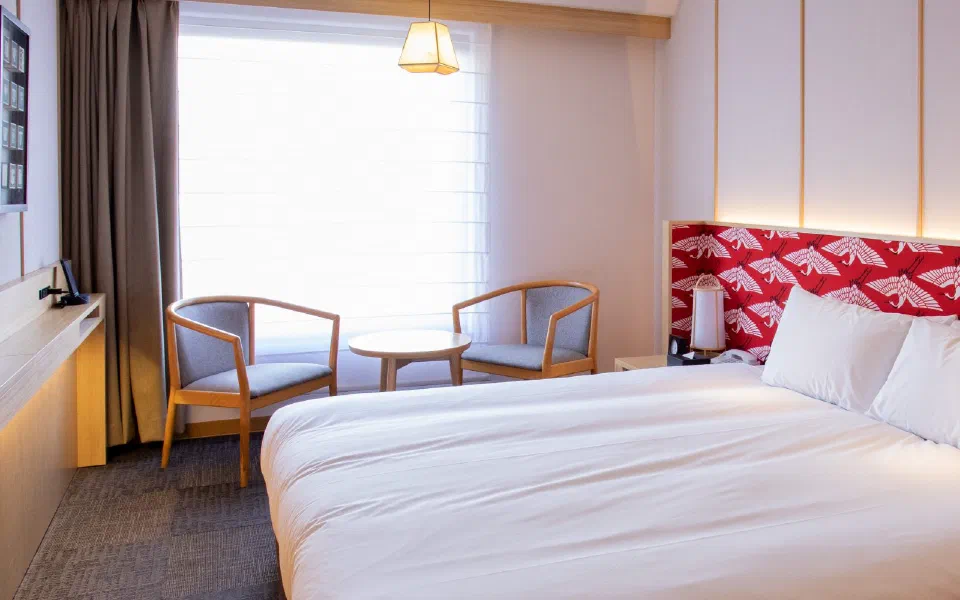 House Room
Noku Kyoto
By Marutamachi station at the southern edge of the Imperial Palace park.View on BookingAt MIMARU, the 40 m² One-Bedroom Family Apartment has two single beds, a bunk bed, a kitchen, dining space and a washer-dryer. The Japanese Apartment uses futons instead of bunks. Up to two children aged six or under can share existing adult beds; children aged seven and over count towards adult occupancy. Tell the hotel in advance about arrival after 22:00.
Noku sits beside Marutamachi. Exit 4 is the nearest stair exit; for a lift, the hotel directs guests to Exit 5, across the road. Its House Room can have a king or twin layout.
Kyoto Brighton Hotel offers a more northerly Palace-side stay with a free Karasuma Oike shuttle. Imadegawa Exit 6 is an operator-estimated eight-minute walk; the shuttle has limited seats.
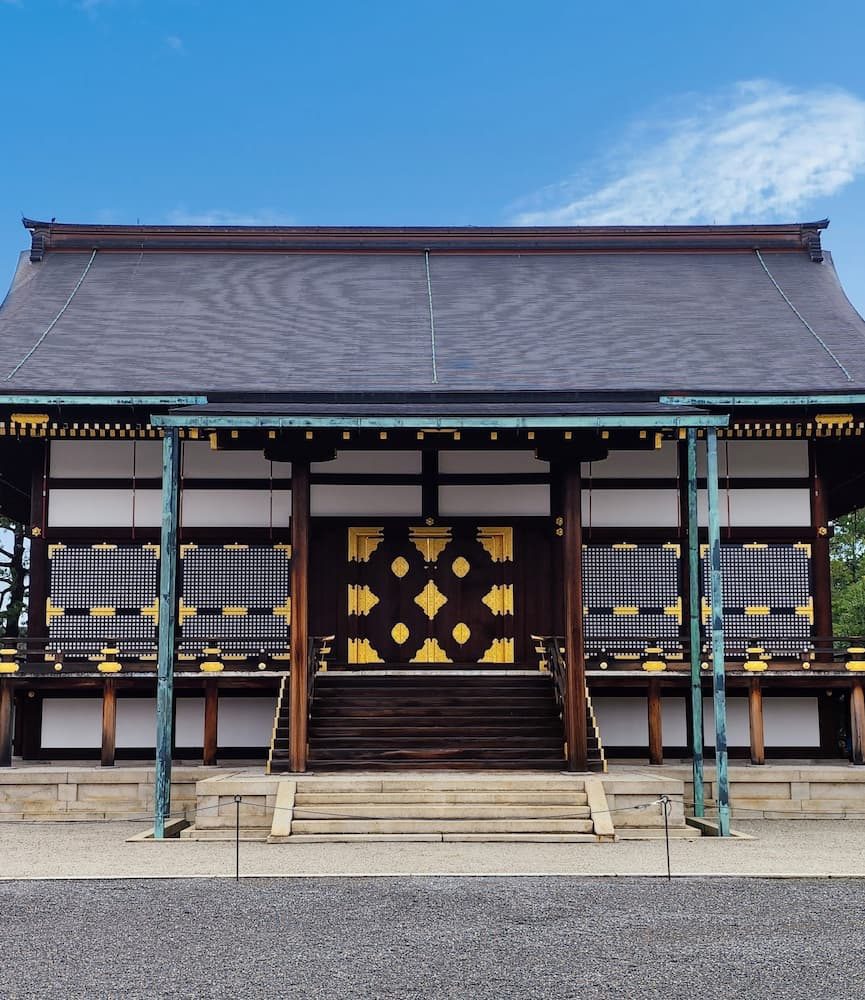
This search covers the southern part of the corridor; it is not a search for every hotel around the Palace.
6. Fushimi Inari: an apartment near the torii
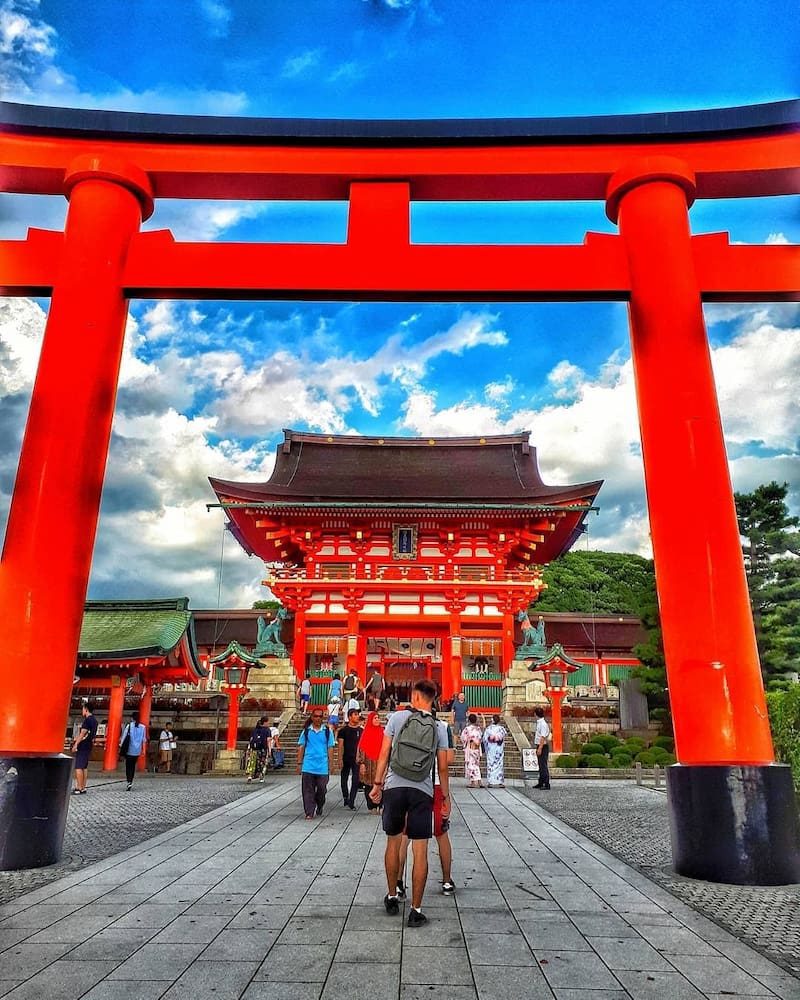
Stay here when an early visit to Fushimi Inari is a reason for the trip. At dawn, the path climbs through vermilion torii. The shrine grounds are free to enter and stay open overnight, while counters and services keep daytime hours. The neighbourhood is a quieter residential alternative to Downtown, with less evening choice on your doorstep.
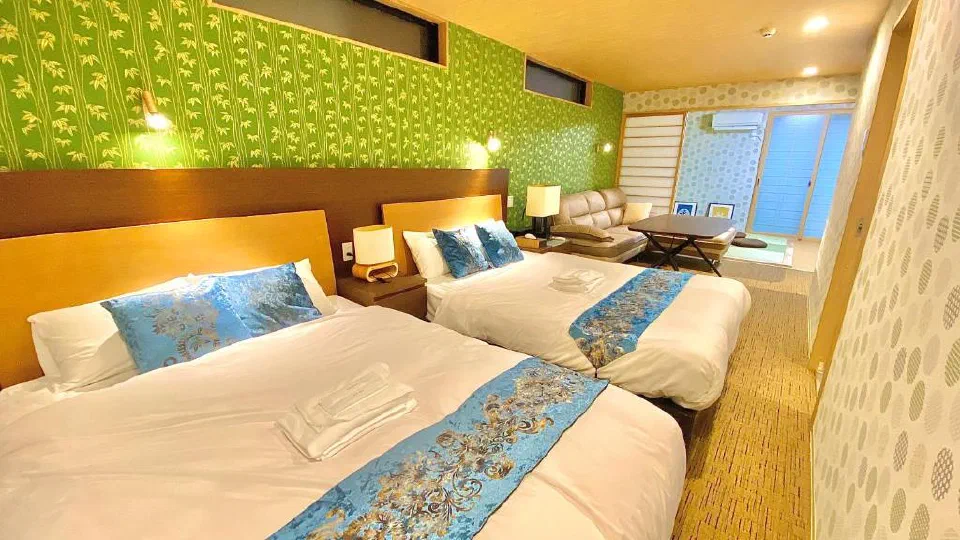 Apartment bedroom
One More Heart Fushimi Inari
A kitchen and washer near Inari. Arrange arrival in advance; check-in starts at 16:00.View on BookingThe exact One More Heart listing used here is at 57 Fukakusa Inari Nakanomachi. Its One-Bedroom Apartment includes a kitchen and washing machine. Arrange arrival details in advance; check-in begins at 16:00. Children aged six and over are charged as adults, and the listing offers no cots or extra beds.
Use JR Inari for the Kyoto Station connection or Keihan Fushimi-Inari for the eastern river corridor. These are different stations. This section is about the Inari/Fukakusa neighbourhood, not every address in the much larger Fushimi ward.
Arriving with luggage
Kyoto Station is the main arrival hub. A hotel beside it simplifies the first night; elsewhere, include the station exit and final hotel leg in the journey.
Kansai International Airport (KIX)
HARUKA runs directly to Kyoto Station. Allow roughly 80 minutes on the train, depending on the service, plus airport formalities, waiting and the hotel leg. For purchases from 1 November 2026, the visitor HARUKA One-way Ticket costs ¥2,700 for adults aged 12+ and ¥1,350 for children aged 6–11. It requires a foreign-government passport and Temporary Visitor status; this is a specific discount product, not the fare available to every traveller. Buy this visitor ticket through an eligible online or overseas sales channel. Ordinary reserved seating is included.2
Kansai-airport Station connects to Terminal 1’s second floor; Terminal 2 needs a separate terminal transfer. Use the ticket’s own collection or QR instructions, since the two formats differ.
The airport coach costs ¥2,800 adult / ¥1,400 child to Kyoto Station Hachijo Exit. The operator gives about 85–90 minutes from Terminal 1, subject to traffic; Terminal 2 takes longer. Board at Terminal 1 stop 8 or Terminal 2 stop 2 on services calling there. From the airport, seats are first come, first served; Kyoto-to-KIX departures use reservations.
Osaka Itami Airport (ITM)
The limousine bus to Kyoto Station Hachijo Exit costs ¥1,500 adult / ¥750 child, with an operator estimate of 50–55 minutes, traffic permitting. Board at airport stop 2. This service is first come, first served. Some evening departures continue to Shijo-Kawaramachi and Kyoto City Hall. If you are staying Downtown, check whether your bus stops nearer your hotel.
For these airport coaches, child fares apply to elementary-school children. One preschool child without a separate seat travels free per fare-paying passenger; a separate seat requires a child ticket. Each operator allows two checked bags totalling 30 kg, within its size limits.
From Tokyo, direct Tokaido Shinkansen services to Kyoto leave from Tokyo Station and Shinagawa. See the JR Central timetable.
From the station to your base
For Karasuma Oike or Marutamachi, the Karasuma subway avoids a road journey. For Sanjo, the rail route can include a change at Karasuma Oike to the Tozai line; use Royal Park’s Kyoto Shiyakusho-mae directions. For Gion, a taxi or a hotel’s shuttle can simplify luggage handling; JR to Tofukuji followed by Keihan is another rail route. For Arashiyama, JR Sagano services reach Saga-Arashiyama, with the remaining walk or taxi to the inn.
Kyoto offers luggage storage and delivery services. Leave large cases before sightseeing where practical; the city asks visitors to avoid taking them onto city buses. Delivery coverage and cut-off times depend on the provider and hotel.
Getting around: use rail where it fits
Kyoto’s two subway lines are only part of the network. JR, Keihan, Hankyu and Randen reach different districts; combine a useful train journey with walking or a shorter bus leg.
Ordinary city buses in the flat-fare zone cost ¥230 adult / ¥120 child. The Subway & Bus 1-Day Pass is ¥1,100 / ¥550, valid for the calendar day of use. It covers the municipal subway and eligible buses, not JR, Hankyu or Keihan trains. Child fares generally cover elementary-school ages six to eleven, with the operator’s school-age rules applying at the boundaries. Buy the pass for the journeys you will actually take: five ordinary adult bus rides would cost ¥1,150 separately.
On Saturdays, Sundays and public holidays, sightseeing express EX100 and EX101 leave the station’s north-front D1 stand. Both serve Gojozaka; EX100 continues towards Gion and Ginkaku-ji. They cost ¥500 adult / ¥250 child, or are included in the pass. Gojozaka is below Kiyomizu-dera: an uphill walk remains.3
Accommodation tax: calculate it per person
Kyoto’s tax depends on each person’s nightly accommodation charge. For stays from 1 March 2026, the bands below apply.4
| Accommodation charge per person, per night | Tax per person, per night |
|---|---|
| Below ¥6,000 | ¥200 |
| ¥6,000 to below ¥20,000 | ¥400 |
| ¥20,000 to below ¥50,000 | ¥1,000 |
| ¥50,000 to below ¥100,000 | ¥4,000 |
| ¥100,000 or more | ¥10,000 |
The taxable charge includes accommodation-related service fees, but excludes meals and consumption tax. Children are not automatically exempt: the tax applies when an accommodation charge arises.
Tax calculation. A ¥37,000 taxable room charge split equally between two adults is ¥18,500 each. Their tax is ¥400 each per night, or ¥3,200 together for four nights. For a meal-inclusive or family rate, use the property’s per-person accommodation charge. Pay the tax to the accommodation unless it was already collected through your booking.
When your dates change the choice
For cherry-blossom season, autumn leaves and July’s Gion Matsuri, reserve the base you want early, ideally with cancellation terms that suit your plans. Flowering and foliage dates vary; a forecast should not decide the hotel months ahead.
Winter is not uniformly quiet for accommodation: university entrance exams and the Kyoto Marathon can also tighten availability. Compare your actual dates before assuming a cheaper season means a cheaper room.
Make the final choice
For a short trip, one well-placed hotel usually keeps the days simpler. Split the stay when the second property adds a different experience, such as an Arashiyama dinner and hot-spring evening, rather than merely moving you closer to one sightseeing stop.
FAQ
Which base is easiest for a first Kyoto trip?
Downtown is the broadest starting point for meals, shopping and walks across the river. Choose Kyoto Station if early departures or repeated rail trips dominate the itinerary. For eastern streets and a more atmospheric hotel stay, look at Gion .Where should a family stay?
An apartment near Karasuma Oike gives you a kitchen and separate sleeping places, provided you choose the appropriate room category. A station hotel can simplify luggage. Granvia’s pool and fitness facilities are 18+, so it should not be booked for children’s swimming.Should I choose a hotel, ryokan or machiya?
A hotel suits days spent out and flexible evenings. Choose a ryokan when you want time for its meals and bathing, and compare the full meal plan. A machiya describes a traditional townhouse: it may be an independently managed rental or part of a staffed hotel, with kitchens, bedding and hot-spring water depending on the property.Is Arashiyama too far out for the whole stay?
It can be a good base if western Kyoto and the hotel itself are the focus. For a first trip covering many eastern sights and city dinners, Downtown is usually easier, with Arashiyama as an outing or a separate overnight stay.Do I need a Japan Rail Pass for Kyoto?
Not simply for staying in the city. Compare a national pass against your complete intercity itinerary; for local journeys, an IC card and occasional route-specific tickets or day passes are often more useful. Several of Kyoto’s useful railways are separate from JR.Should I sleep in Osaka instead?
Stay in Kyoto when you want unhurried mornings and evenings here. If your evenings are in Osaka, choose a base there and plan Kyoto visits around the return trains.Sources & updates
Hotel, transport-operator and city information was checked remotely on 10 November 2026. Room features apply to the named categories and meal arrangements depend on the rate you book. Booking.com guest scores and review counts were checked on 22 November 2026 and describe each property overall.
Rooms, families and access
- SOWAKA’s hotel FAQ identifies Annex rooms for younger children. The SOWAKA Booking listing lists 12+. MIMARU Shinmachi Sanjo’s apartments and family policy show sleeping arrangements and explain how children count towards room capacity.
- Hotel Granvia’s pool age rule applies to the facility. Noku’s directions show the two Marutamachi exits, including the one with a lift.
Ryokan plans and hotel notices
- Togetsutei’s Booking listing and direct dinner plan give different arrival windows. Its rooms and baths explain which baths use hot-spring water and which allow tattoos. See the Hekisenkaku room listing for the stairs. ↩︎
- The Celestine Kyoto Gion’s notices give the dates and hours for adjacent construction through 31 March 2028 and the full closure on 12–13 January 2027. Its bath policy explains access for guests with tattoos.
Airports and luggage
- JR West’s HARUKA visitor fare and eligibility apply to purchases from 1 November 2026. Use the operator timetable for the train you plan to take. ↩︎
- Compare the Kansai airport coach and Itami airport coach fares and stops. For large cases, see Kansai coach luggage limits, Itami coach luggage limits and Kyoto’s storage and delivery options.
Getting around Kyoto
- Kyoto’s transport bureau lists standard city-bus fares, 1-Day Pass coverage, and the sightseeing buses’ operating days and stops and fares. ↩︎
- The Gion South association’s visitor map identifies private lanes. The Fushimi Inari visitor listing distinguishes shrine access from service hours.
Accommodation tax
- The City of Kyoto publishes the rates from 1 March 2026 and answers about children and taxable charges. ↩︎
Hotel photo sources
- Royal Park Kyoto Sanjo: Standard Twin · The Royal Park Hotel Kyoto Sanjo official gallery · source
- SOWAKA: Main Building Room 103 Deluxe Garden View · SOWAKA official gallery · source
- MIMARU Shinmachi Sanjo: One-Bedroom Family Apartment · MIMARU official gallery · source
- Noku Kyoto: House Room with king bed · Noku Kyoto official gallery · source
- Hotel Granvia Kyoto: Superior Twin · Hotel Granvia Kyoto official gallery · source
- Togetsutei: Kiyotaki-no-ma tatami room · Togetsutei official gallery · source
- One More Heart Fushimi Inari: Apartment bedroom · Booking.com property gallery · source